


More Information
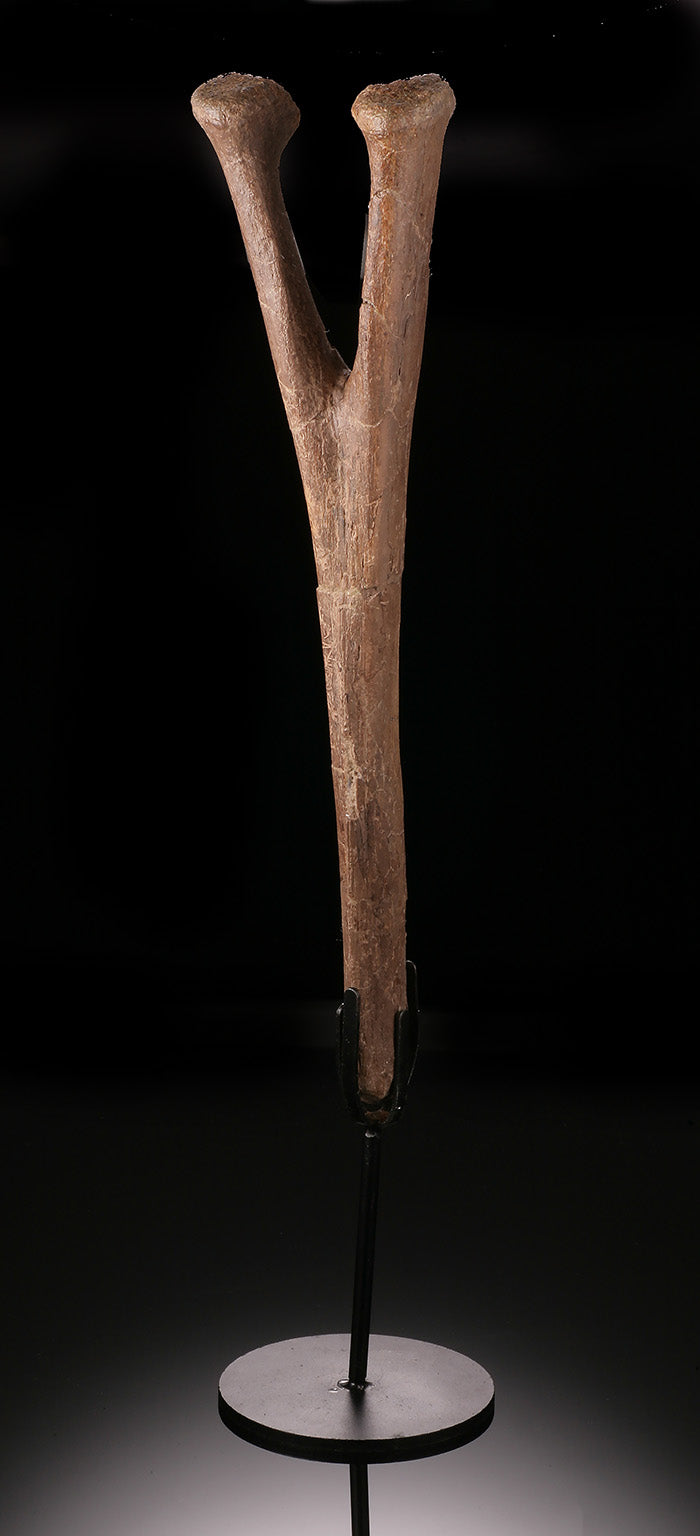
A hadrosaur chevron is a v-shaped bone on the underside of the tail of a duck-billed dinosaur that protected nerves & blood vessels. These bones also anchored tendons and ligaments, contributing to the tail's flexibility, strength, and balance. They were part of a series of bones called haemal arches that collectively formed a canal to safeguard the tail's vital structures.
Edmontosaurus was a genus of Hadrosaurid "Duck Billed" dinosaur, a huge beast which roamed in herds across Western North America during the Cretaceous time period. At over 40 feet in length, Edmontosaurus was one of the largest dinosaurs. Its immense size was its natural defense against the carnivores during the time. Along with its massive size Edmontosaurus had an extremely long and heavy tail. The tendons in much of the Edmontosaurus back and tail were "ossified". This is a process where tendons transform from softer tissue into bone. Edmontosaurus needed this process to occur in order to help its muscles support its massive tail. Edmontosaurus had a unique hinge between the upper jaws and the rest of its skull, allowing it to push its upper jaw outwards and sideways while chewing, as the lower jaw slid against the hundreds of upper teeth it had in the back of its mouth.
